Holovis’ 360Golf brand is repositioning miniature golf as a connected gaming platform rather than a standalone course. The proposition combines a familiar putt-and-play format with automated scoring, game mechanics and venue analytics, aimed at the competitive socialising market. Holovis is preparing to show the system at IAAPA Expo in Orlando and at the Land Leisure & Tourism Show in Birmingham, where operators can examine both the course product and the operating model behind it.
From scorecard to game layer
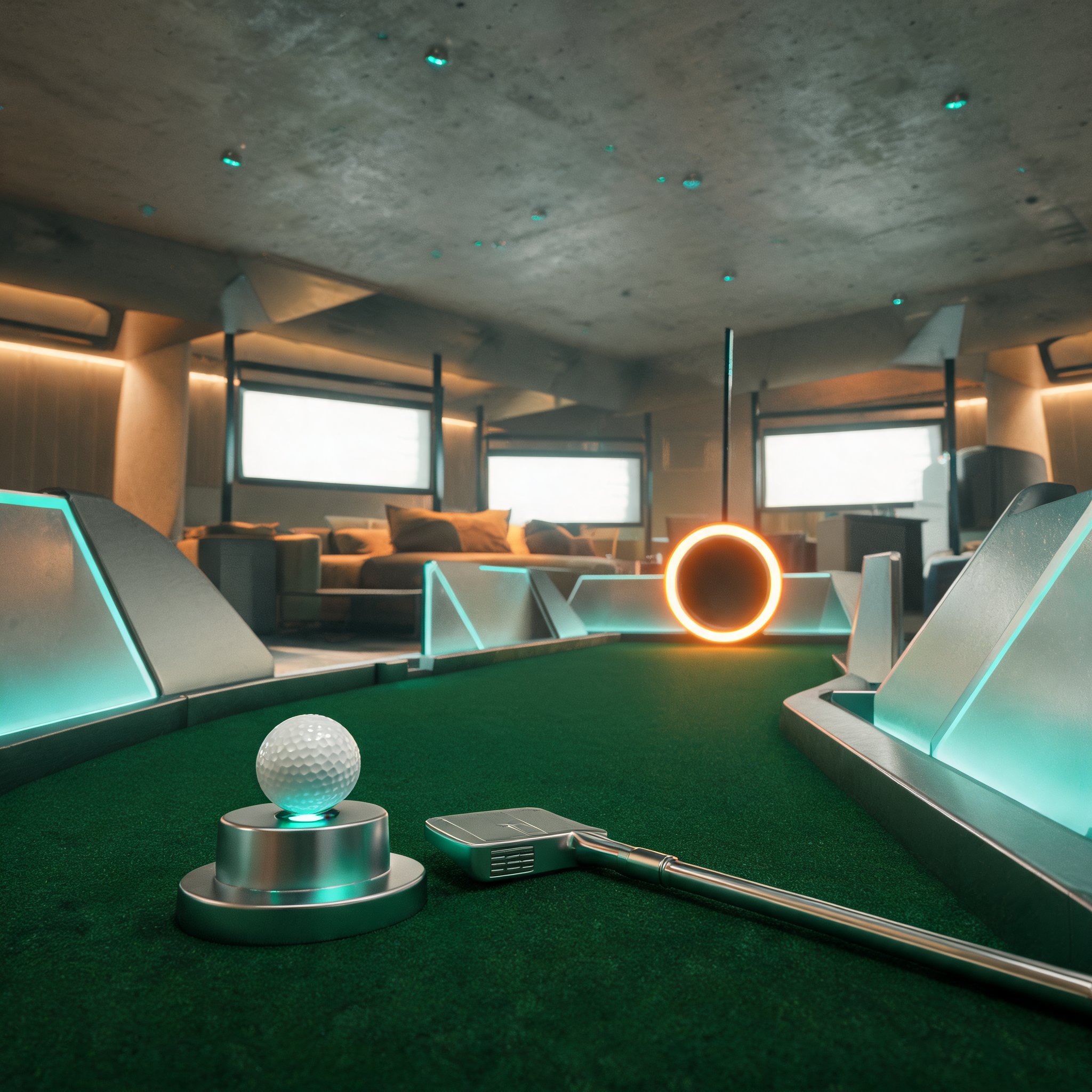
The physical setup is built around smart balls, tees and cups working with the HoloTrac scoring system. This removes paper scorecards and gives groups an automatic referee when play becomes competitive. Visitors can register, collect an assigned ball and begin without a lengthy briefing, a design choice that reduces staff time at the start of a session and keeps the focus on play.
On top of scoring, 360Golf adds a set of gamified elements: SuperShots that create alternative ways to score, Triumphs that present awards and unlock challenges, plus bonuses, on-course games, player accounts, achievements, leaderboards and video celebrations. The intended effect is to give players reasons to compete, compare results and return. These features are not merely decorative; they create a record of progress across visits, which is central to the platform’s repeat-visit argument.
Analytics and operating economics
The DeepSmarts AI engine supplies operators with analytics on player behaviour, seasonality and course use. Holovis says those insights can support decisions on promotions, dwell time and secondary spend, and can help engineers diagnose problems remotely. The operating case is strongest where a venue can act on the data: adjusting staffing, targeting quieter periods or shaping food and beverage offers around observed demand.
360Golf says a course can handle up to 80 people per hour, and that the system is designed for straightforward course management and high throughput. At Butlin’s PLAYXPERIENCE centre in Bognor Regis, a £15m project that opened in 2024, the three nine-hole courses include a neon-glow layout, a Las Vegas-themed course and a wheelchair-accessible music-themed course. According to 360Golf’s Matt Dobbs, busy weeks have brought 5,000 players through and grossed around £40,000 in revenue per week. These are company-reported figures rather than independently audited results, but they illustrate the metrics the platform is designed to influence: player volume, dwell time and ancillary spending.
Flexible formats, custom builds
The deployment model is deliberately broad. Operators can choose a technology-only retrofit for an existing mini-golf attraction, a set of catalogue holes, or a fully bespoke course. Timelines vary accordingly: 360Golf cites about six to eight weeks for tech-only installations, eight to 12 weeks for catalogue holes, and six months or more for custom projects. That range lets the company address smaller entertainment venues that need a cost-effective upgrade as well as large destinations that want a distinctive anchor attraction.
Custom work also shows how the platform adapts to physical constraints. For Norwegian Cruise Line, 360Golf has delivered four installations under the Tee Time brand, using marine-grade, waterproof equipment, rugged cups and tees and specialist screens for use at sea. At Netflix House, the Top 9 course is a fully custom, IP-led installation with unique hole designs and interactive elements themed around properties including One Piece, Squid Game and Floor is Lava. In Norway, the Lucky Duck project gives each hole two play routes, adding variety without expanding the footprint.
Inclusion, consistency and scale
Inclusive design is part of the product brief. 360Golf has worked on courses that can be played right- or left-handed, with putters in appropriate sizes and layouts that allow wheelchair users to get close to or onto the course. At Butlin’s, the team added a drop-down top cap to improve wheelchair access, kept some tees near the edge for reach, and maintained spacing between holes to reduce congestion and safety risks. Those details matter for family venues and for operators trying to serve mixed-age groups.
The same technology supports multi-site consistency. Saudi Entertainment Ventures, known as SEVEN, and Ireland’s Super Social are cited as operators looking for repeat visitation across locations. Because scoring and gameplay are standardised, an operator can vary theming, layout or branding while keeping the core experience recognisable. Smaller venues can use simpler, more cost-effective course designs while retaining scoring, replayability and the broader 360Golf system.
What the platform does not settle
The commercial claims remain largely Holovis’ own. No independent verification of throughput, revenue uplift or gamification’s effect on repeat visits is provided, and results at one resort may not transfer to every venue. The analytics layer also depends on operators having the staff and processes to act on the data. In addition, 360Golf’s expansion into other sports is still at an early stage: the team is working with Roxy Leisure on stroke-counting technology for crazy pool tables, and Edgington expects competitive socialising eventually to reach peak saturation, which is why Holovis is examining adjacent markets.
For now, 360Golf’s proposition is a turnkey package rather than a course sale alone: physical design, scoring hardware, game software, analytics and support are presented as one operating system for a venue. The company’s next test is commercial proof across very different settings, from cruise decks and IP-led attractions to smaller local venues and multi-site chains.