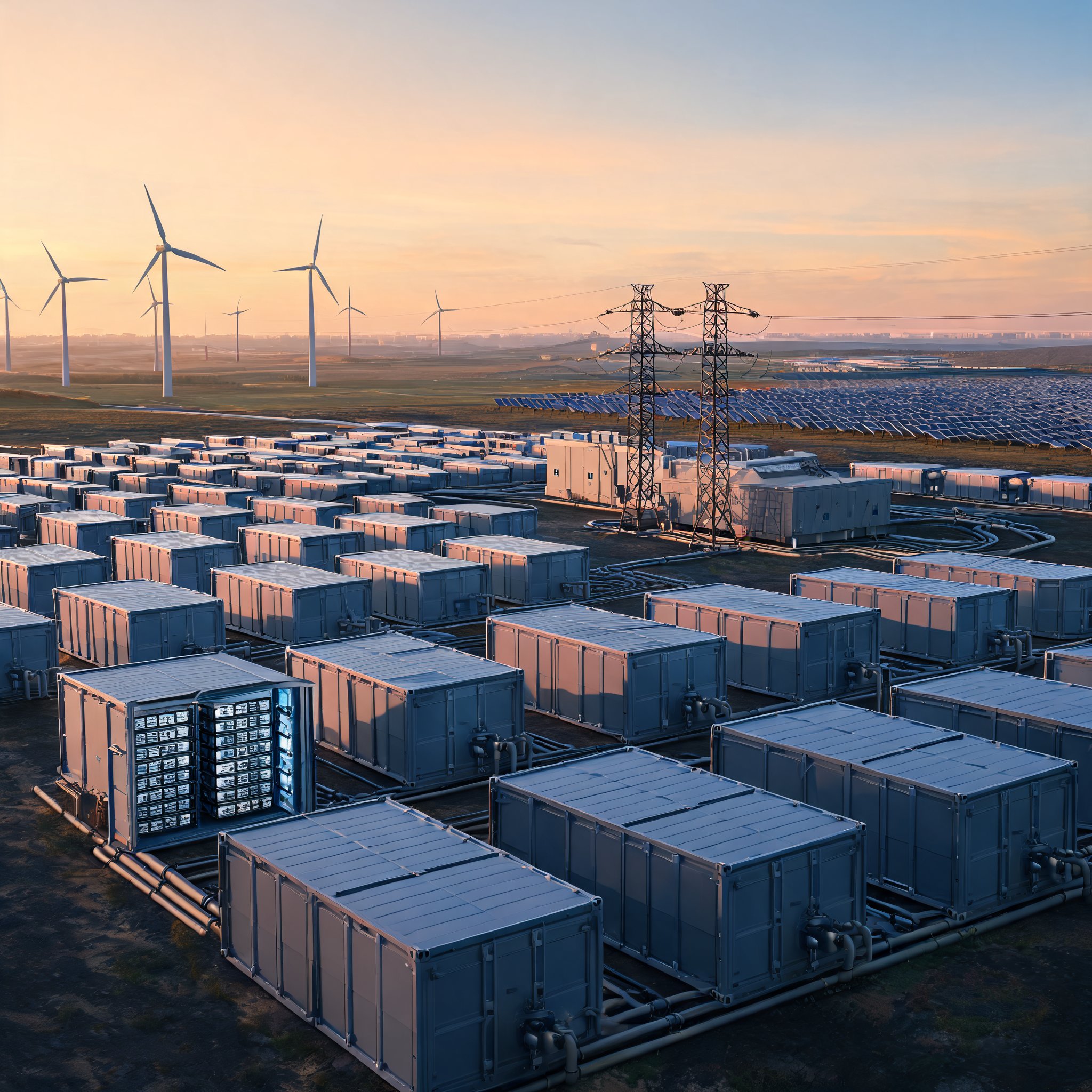
China’s operational new-type energy storage fleet reached 167 GW/435 GWh at the end of September 2026, 63% higher year on year, according to National Energy Administration figures presented at its quarterly press conference on Oct. 30.
The category includes electrochemical, compressed-air and other emerging storage systems but excludes conventional pumped hydro. At the end of 2025, capacity stood at 135.93 GW/351.12 GWh, implying a net addition of about 31 GW/84 GWh in the first nine months of 2026.
Utilization also improved. Average storage duration rose to 2.61 hours, about 0.27 hours more than a year earlier. Equivalent utilization hours reached roughly 915 during the nine-month period, up about 10 hours from the same period in 2025. The NEA said this suggests expansion is being accompanied by changes in system configuration and use, not just installed capacity growth.
Renewables increase need for flexibility
China’s combined wind and solar generating capacity exceeded 2.01 TW at the end of September, or about 48.7% of total installed power capacity. As variable renewable output grows, storage is needed to absorb surplus electricity, shift generation to periods of higher demand and provide fast-response grid services. The NEA attributed the sector’s rapid development to government policies, technological innovation, industrial supply chains and rising demand for flexibility.
Market structure shifts
Official 2025 figures show independent storage facilities accounting for 51.2% of cumulative new-type storage installations. Projects rated at 100 MW or above made up 72% of installed capacity, while systems with at least four hours of duration represented 27.6%. Lithium-ion batteries remained dominant, at about 96% of installed new-type storage capacity, though compressed-air, flow batteries and other technologies are gradually gaining ground.
Market reforms are expected to reinforce these trends. China has been developing arrangements that let independent storage operators earn revenue from electricity trading, ancillary services and capacity remuneration. The aim is to reduce reliance on mandatory storage requirements tied to renewable projects.
Targets and regional operation
Under the 15th Five-Year Plan for power system development, China targets 300 GW of new-type storage by 2030, with greater emphasis on longer-duration systems, grid-forming capabilities and operational efficiency.
The operational contribution is already visible in renewable-rich regional grids. In western Inner Mongolia, the grid operator reported 20.23 GW/70.47 GWh of operational storage in October. During emergency dispatch, storage supplied up to 12.25 GW, equal to 33% of the grid’s electricity demand at the time.
Such cases show how storage can provide short-term balancing capacity in systems with high renewable penetration. For other countries expanding wind and solar, China’s deployment offers experience in large-scale storage manufacturing, grid integration and centralized dispatch.