The Floating Farm in the Port of Rotterdam is continuing dairy production under a revised operating model after its owners abandoned a planned sale and moved the herd to nearby farms. The project was designed to promote sustainable farming on a new scale.
It opened in May 2019 as a futuristic attempt to produce food sustainably without the traditional tie to land. Peter and Minke van Wingerden invested €4 million in the farm, which included on-site feeding, milking, slurry and dairy production facilities. For years it housed 28 Dutch MRI cows and produced milk and dairy products that local consumers could buy from vending machines at the site. Hundreds of thousands of visitors travelled from around the world to see the cows in operation.
Compliance dispute led to sale plan
Recently, the owners put the farm up for sale after a dispute with the local environmental department, which said a newly fitted floor did not comply with regulations. The cows were removed and were due to be sold, and milk production was to stop. Peter van Wingerden said the farm has the lowest emissions possible because of its modern technology and system, but the rubber floor is German and has no certificate of compliance in the Netherlands.
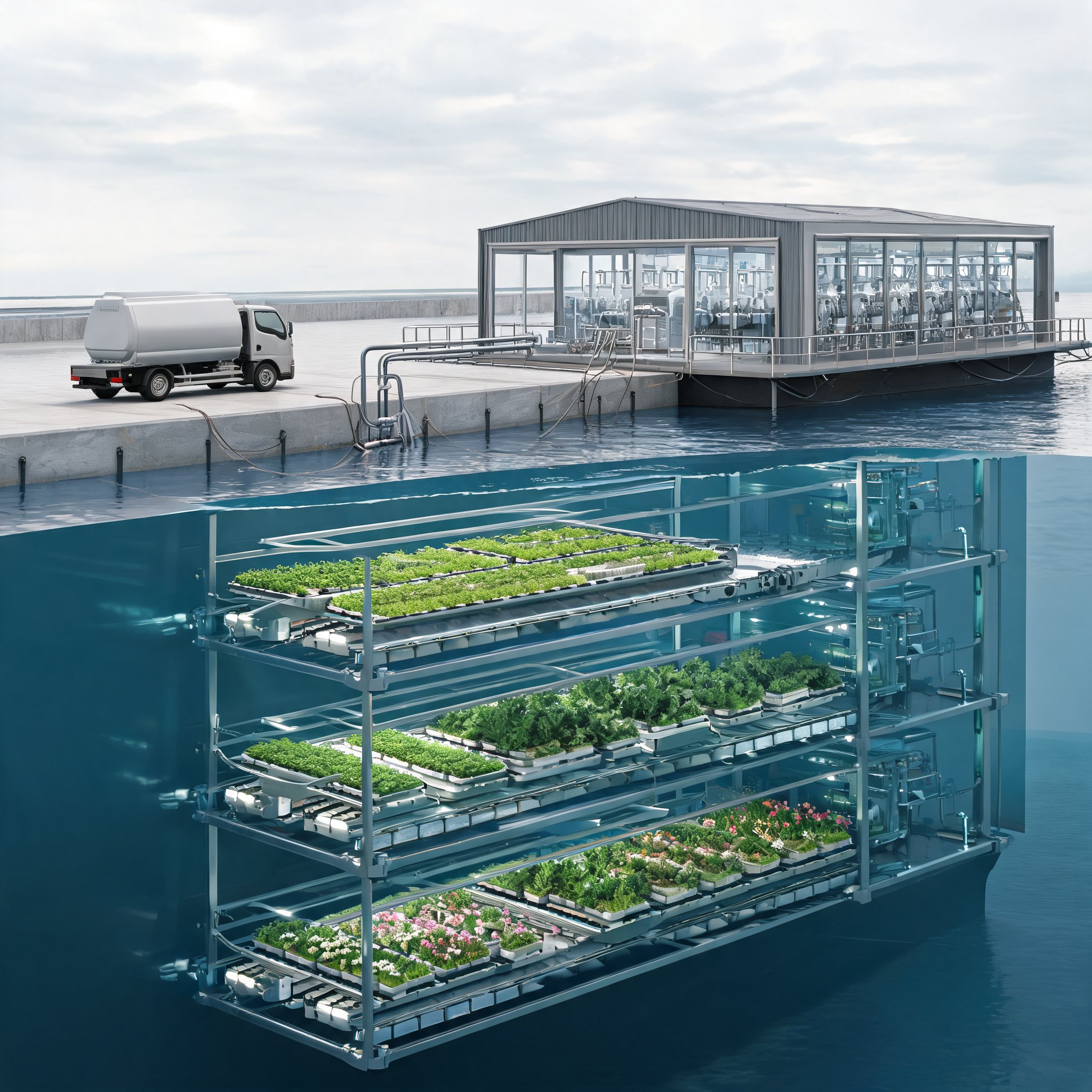
The sale is no longer going ahead. The cows have been moved to several farms around 20 km away, and dairy production is continuing. According to Peter, a regular dairy truck brings milk from the dairy twice a week, at approximately 1,500 litres per batch. A stainless steel pipeline runs from the quay to the farm. He said the distance from the milk supplier is just 20 km, giving a short transport time.
Vertical crops below the waterline
The floating structure also contains a vertical salad-growing enterprise in its lower level. Peter described it as a fully controlled, automated growing space with three layers and conveyor belts, combining grow-room and warehouse technology. Four types of crops are grown: microgreens harvested every two weeks, herbs every three weeks, leafy greens every four weeks and edible flowers every four to five weeks.
According to Peter, the crops are used to make tea, pesto, Parmigiano cheese, herb-infused salts and herb-infused whey. The vertical farm sits below the waterline, so it is cooled by the water. He said the operation is performing well.
Port exit due in just over two years
The Floating Farm will have to leave the port in just over two years because the entire area is to become residential. Peter said this was not the vision the project began with, but that the team is coping with the system. The current arrangement combines dairy production using milk from nearby farms with vertical horticulture on the floating structure.