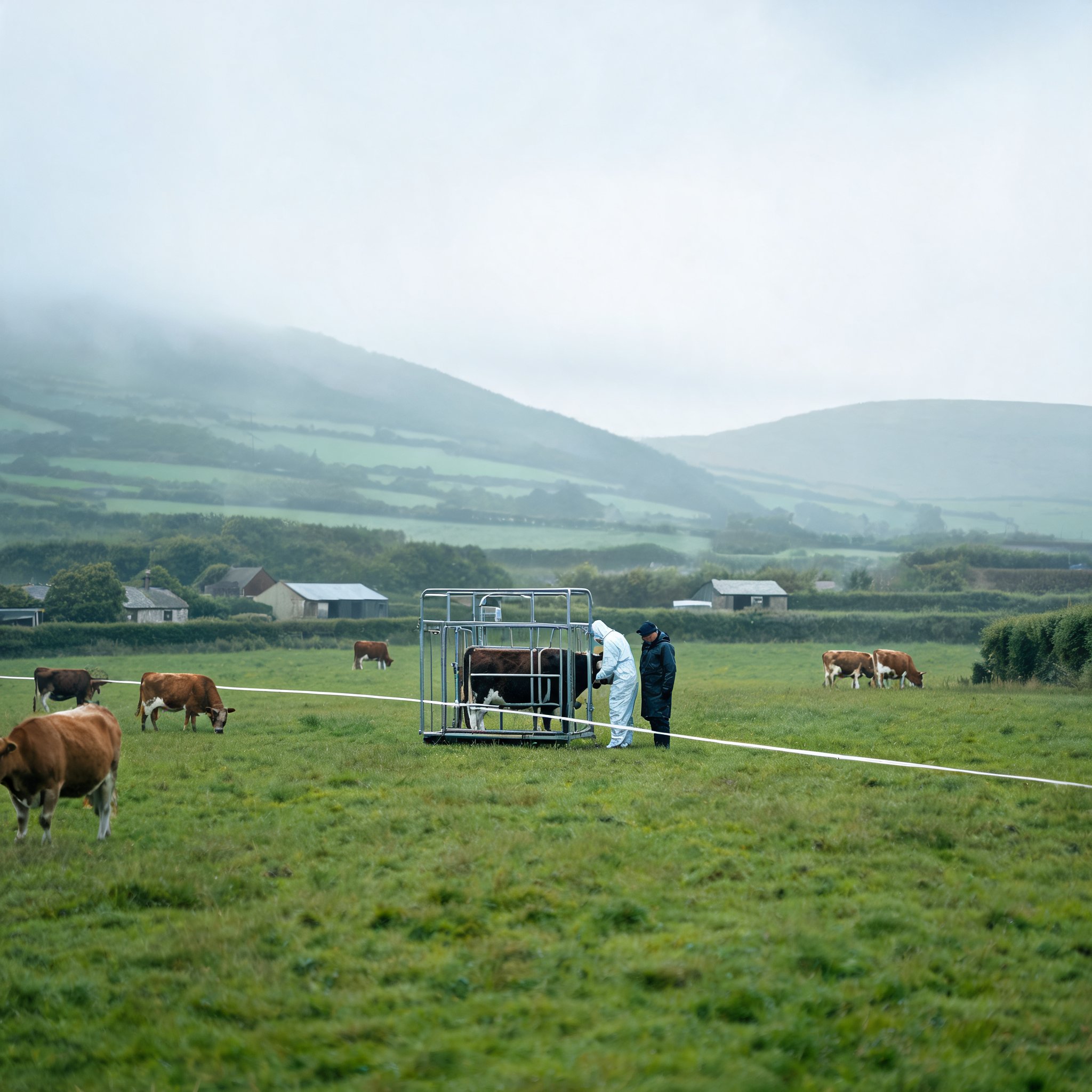
The Department of Agriculture, Food and the Marine (DAFM) is closely monitoring a bovine tuberculosis (TB) hotspot in north Kerry and west Limerick, where infection levels are running above the national average, Minister of State Niall Collins has said.
Speaking at the Listowel Food Fair Farming Seminar at the Listowel Arms Hotel on Monday, Collins said the rise in TB in north Kerry and his own west Limerick was worrying and of significant concern. He said the department was very aware of the emotional and financial challenge a TB breakdown creates for farmers, their families and communities.
Local rise against a national decline
Collins said the local increase stood out against recent national progress. DAFM statistics for the 12 months to September 27, 2026, put national herd incidence at 5.40%, down from 6.08%. The number of restricted herds fell 12% to 5,353, while reactors were down 9.5% to more than 36,374.
He said the national reduction of about 10.9% compared with the same time last year reflected efforts by all stakeholders to engage with farmers and reduce the risk TB poses to Irish herds and rural communities. Above-average disease levels nevertheless persisted in several regions, including the north Kerry and west Limerick hotspot.
Budget and programme focus
More than €142 million has been earmarked for bovine TB measures under Budget 2027, Collins told the seminar. The existing valuation ceilings for reactor animals were increased by €500. He said the overall allocation was lower, but attributed that to the national reduction in TB rather than a reduced emphasis on the programme.
The minister said the department's focus remained on lowering disease levels, which would in turn reduce the impact on farm families, the cost of the programme and costs for farmers and taxpayers.
Action plan and local response
The Bovine TB Action Plan, launched in September 2025, contains about 30 actions underpinned by scientific research, evidence and veterinary expertise. In April, changes were introduced to animal testing and animal movement requirements to reduce cattle-to-cattle transmission.
Collins said he was confident that focusing efforts locally, alongside the action plan and this year's changes, would drive disease levels down further. He added that DAFM was monitoring the rise in cases in north Kerry and west Limerick on a day-to-day basis and that he would engage with departmental officials in real time to try to reverse the trend.
He also said he had asked for more resources, including manpower, to be made available to local staff to help them respond.