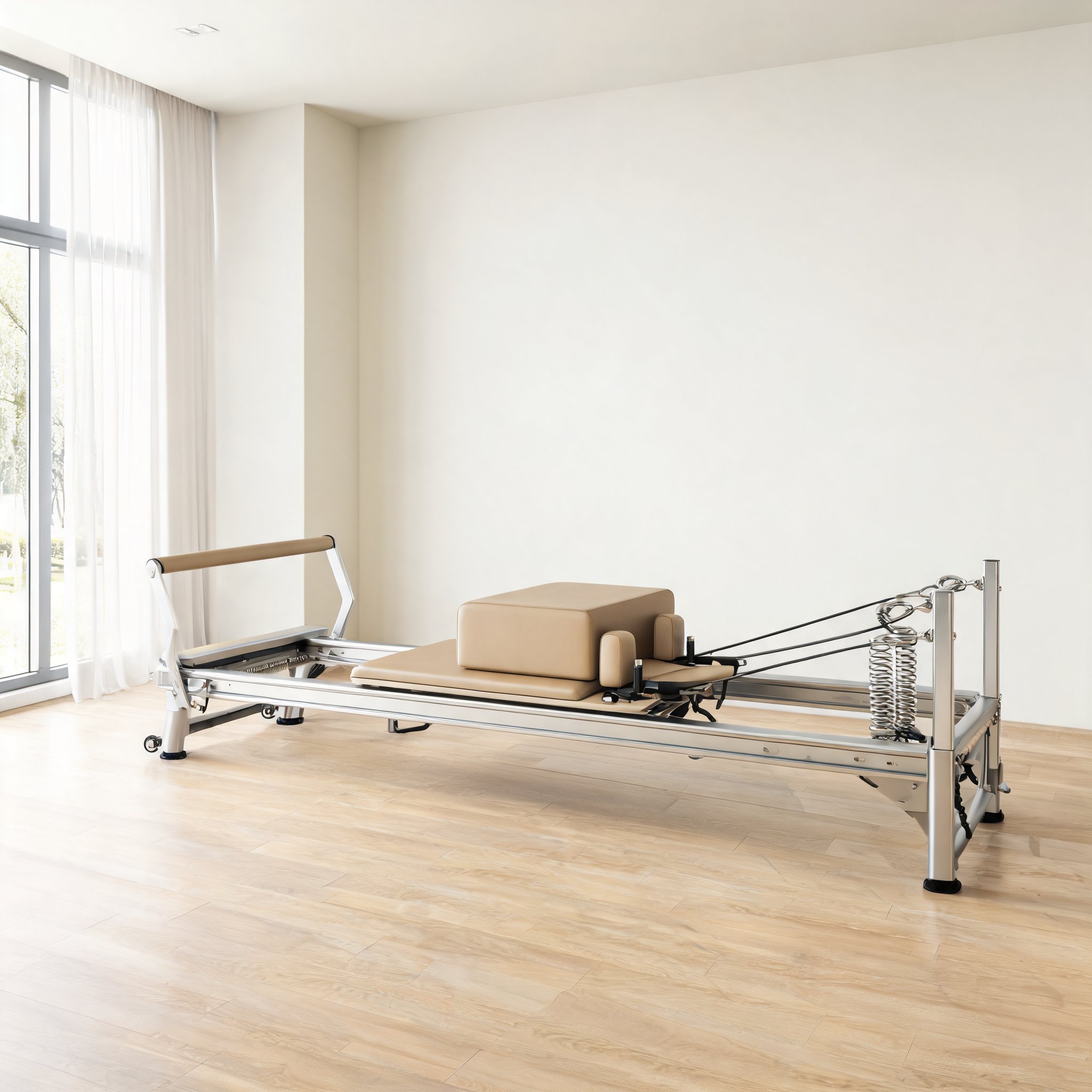
Shenzhen Ruiteng Sports Technology Co., Ltd., which markets the RINTELN brand, is showcasing CE-certified basic aluminium Pilates reformer models for wholesale buyers. The company says the line combines anodised aluminium profiles with German-imported springs and sealed bearings, targeting professional Pilates studios, commercial gyms and rehabilitation academies.
Demand growth puts procurement under scrutiny
Following international fitness trade gatherings such as FIBO, commercial gym operators and wellness studios are expanding mind-body exercise offerings. Demand for commercial Pilates equipment is accelerating in Europe, North America and the Asia-Pacific region, and lightweight but structurally resilient aluminium reformers have become a preferred choice for modern studio spaces.
That growth also raises procurement risk. Buyers evaluating a wholesale basic aluminium reformer manufacturer in China must look beyond surface appearance, because machines that look similar can differ significantly in structural engineering. Common problems reported after low-cost machines are deployed in high-traffic studios include noisy carriage tracking, frame deflection under dynamic body loads, premature spring tension fatigue and rapid roller wheel deformation. Such failures can interrupt group sessions, affect user safety and increase maintenance costs.
The sourcing checklist focuses on four areas. First, verifiable CE certification is presented as essential for commercial operation, dynamic load safety and structural integrity under European import and insurance requirements. Second, carriage mechanics determine workout fluidity; generic bearings and unrefined plastic wheels can produce track friction, uneven glide and mechanical lag. Third, spring alloy metallurgy affects long-term resistance stability, with low-quality steel springs at risk of losing calibrated tension and suffering fatigue. Fourth, supply-chain flexibility matters, because rigid order minimums, limited frame colours and long lead times can hinder franchise expansion and custom studio projects.
RINTELN details component and carriage engineering
RINTELN was established in 2021 and focuses on high-grade equipment for professional Pilates studios, commercial gyms and rehabilitation academies worldwide. According to the company, the manufacturer integrates German-imported springs for consistent tension profiles and fatigue resistance, along with original German sealed bearings intended to reduce rotational friction and support smooth kinetic feedback.
For carriage performance, an internal 11-person research team spent 180 days testing material formulations to develop a silent wheel assembly. The design combines a high-density, high-tensile polyurethane outer layer with concentric wheel construction. The company says this eliminates carriage vibration, floor drag and track noise under maximum load.
The basic aluminium reformer line uses high-grade anodised aluminium profiles and is available in classic silver and black finishes. RINTELN positions the series for high-traffic group studio environments, where structural rigidity and a clean industrial footprint are both required.
Low-MOQ sourcing and after-sales support
- Order flexibility: a one-piece minimum order quantity allows international buyers to order an evaluation sample, test carriage mechanics and inspect finishes before bulk purchasing.
- Customisation: buyers can choose from 60 premium leather colours, and the factory offers complimentary laser logos on aluminium frames plus logo embroidery on wristbands and ankle straps.
- Production time: standard lead times range from 7 to 20 days, depending on customisation requirements and total unit volume.
- Warranty and service: the line carries a five-year structural warranty. High-wear replacement parts are packed with initial shipments, and technical support teams provide instructional videos for replacement procedures.
The company presents these terms as ways to lower procurement risk and total cost of ownership for overseas buyers. Independent test data, certification scope and third-party performance results were not provided, so commercial buyers would still need to verify compliance and specifications directly before placing orders.